
Activities
CONTENTS
[FAIE: Economic Law] Law Students Adapting to the Working Environment
Here is a refined and polished version of your text with improved academic tone, clarity, and flow while maintaining the original meaning:
In the context of continuous integration and development, today’s professional environment places increasingly high demands on law graduates. Beyond academic knowledge, soft skills, adaptability, and critical thinking—often cultivated through scientific research—serve as essential foundations that enable Law students to confidently enter a highly competitive labor market.
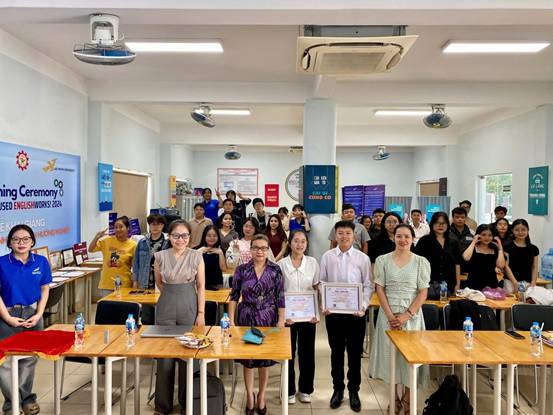
Recognizing the importance of equipping students with these vital competencies, on April 19, the Economic Law Club organized a program entitled “Law Students Adapting to the Working Environment.” The event was attended by faculty members, students, and notably two distinguished guest speakers—alumni of the Economic Law major who have achieved outstanding results in academic research:
-
Mr. Nguyen Ngoc Phuoc – Officer in charge of dossier reception and results processing; Records, Archives, and Treasury Officer at Tan Phong Ward People’s Committee – Third Prize, University-level Scientific Research Exhibition 2024.
-
Ms. Tran Thi Thao Nguyen – Specialist at Huynh Thi Thanh Chi Notary Office – Second Prize, University-level Scientific Research 2024.
Throughout the program, the speakers shared valuable insights into adapting to the professional working environment after graduation. They emphasized the importance of bridging legal theory with real-world practice, particularly in a context where law graduates are expected not only to master legal knowledge but also to apply it flexibly and effectively.
Additionally, the speakers highlighted essential soft skills such as communication, independent working ability, problem-solving, and time management—critical competencies that enable law students to integrate quickly and develop sustainably in professional settings.
Drawing from their personal experiences, the speakers also shared practical guidance on conducting scientific research—from selecting research topics and identifying reliable academic sources to effective teamwork and academic writing techniques. Importantly, they encouraged students to overcome the common feeling of “not being good enough,” a psychological barrier many face when first engaging in research activities.
The session concluded with an engaging and interactive discussion between students and the guest speakers. Numerous questions were raised regarding topic selection, sourcing credible references, and balancing research responsibilities with regular coursework, all of which were addressed openly and thoughtfully.
The program not only provided practical knowledge but also inspired students to confidently embark on their own research journeys—paths that may be challenging yet profoundly meaningful. Through sincere stories and relatable experiences, the speakers conveyed a powerful message: research is not reserved solely for “exceptional individuals,” but is an opportunity for anyone to cultivate critical thinking, discover personal strengths, and contribute fresh perspectives to their chosen field.
It is hoped that following this program, more students will feel empowered to initiate or continue their own research projects—transforming learning from mere knowledge acquisition into creativity and meaningful contribution, while preparing themselves to adapt and thrive in their future professional environments.
